














Dog walker character Default walker character

100% Free Forever • No Ads • No Subscriptions • Community Driven

Learn Spanish with free interactive flashcards and audio pronunciation

Multiple Categories

Transportation • Plants and Animals • Numbers, Colors & Time • Places and Directions • Recreation

Choose Categories: (Click group to expand)

🔄 New Shuffle Order
Page 1 of 86 (770 total flash cards for selected categories)
#1
¿Qué árbol de madera dura es?
👆 Click to reveal answer
#1
¿Qué árbol de madera dura es?
What hardwood tree is it?
✓ el haya
💡 Hint: Beech tree - smooth gray bark, produces beechnuts
Example: El haya tiene una corteza lisa y gris. The beech has smooth, gray bark.
MEDIUM
wordwalker.ca/flashcards
#2
8️⃣
¿Cuántos tentáculos tiene un pulpo?
👆 Click to reveal answer
#2
8️⃣
¿Cuántos tentáculos tiene un pulpo?
How many tentacles does an octopus have?
✓ ocho
💡 Hint: Eight - from Latin "octo
Example: El autobús sale a las ocho en punto. The bus leaves at eight o'clock.
EASY
wordwalker.ca/flashcards
#3
¿Quién vuela el avión?
👆 Click to reveal answer
#3
¿Quién vuela el avión?
Who flies the airplane?
✓ el piloto
💡 Hint: Pilot - person licensed to operate aircraft
Example: El piloto anunció que aterrizaremos en veinte minutos. The pilot announced that we will land in twenty minutes.
EASY
wordwalker.ca/flashcards
#4
💯
¿Cuánto es cien más cien?
👆 Click to reveal answer
#4
💯
¿Cuánto es cien más cien?
How much is one hundred plus one hundred?
✓ doscientos
💡 Hint: Two hundred - plural form, changes to "doscientas" for feminine nouns
Example: El vestido cuesta doscientos dólares. The dress costs two hundred dollars.
HARD
wordwalker.ca/flashcards
#5
🦨
¿Qué animal produce un olor muy fuerte para defenderse?
👆 Click to reveal answer
#5
🦨
¿Qué animal produce un olor muy fuerte para defenderse?
What animal produces a very strong smell to defend itself?
✓ el zorrillo
💡 Hint: Skunk - sprays strong-smelling liquid as defense, black with white stripes
Example: El zorrillo rocía un líquido de mal olor cuando tiene miedo. The skunk sprays a foul-smelling liquid when scared.
EASY
wordwalker.ca/flashcards
#6
¿Cada cuánto pasa el autobús?
👆 Click to reveal answer
#6
¿Cada cuánto pasa el autobús?
How often does the bus pass?
✓ la frecuencia
💡 Hint: Frequency - how often buses run, e.g., every 10 minutes
Example: La frecuencia del autobús es cada diez minutos. The bus frequency is every ten minutes.
MEDIUM
wordwalker.ca/flashcards
#7
🐠
¿Qué animal vive en el agua?
👆 Click to reveal answer
#7
🐠
¿Qué animal vive en el agua?
What animal lives in water?
✓ el pez
💡 Hint: Fish - aquatic animal, has gills and fins, "pescado" means cooked fish
Example: El pez nada entre los corales del arrecife. The fish swims among the reef corals.
EASY
wordwalker.ca/flashcards
#8
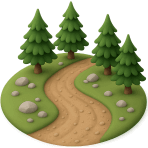
¿Por dónde caminas en la montaña?
👆 Click to reveal answer
#8
¿Por dónde caminas en la montaña?
Where do you walk in the mountain?
✓ el sendero
💡 Hint: Hiking trail - marked path through nature for walking and hiking
Example: Seguimos el sendero hasta la cima de la montaña. We followed the trail to the top of the mountain.
MEDIUM
wordwalker.ca/flashcards
#9
☀️
¿Qué parte del día es después del mediodía y antes de la noche?
👆 Click to reveal answer
#9
☀️
¿Qué parte del día es después del mediodía y antes de la noche?
What part of the day is after noon and before night?
✓ tarde
💡 Hint: Afternoon - after noon until sunset, also means "late
Example: Vamos a la piscina esta tarde. We're going to the pool this afternoon.
EASY
wordwalker.ca/flashcards

📢 Share These Flash Cards

Help others learn Spanish! Share with friends and family:

🎮 Try the WordWalker Game (Learning Spanish for Kids)