













Dog walker character Default walker character

100% Free Forever • No Ads • No Subscriptions • Community Driven

Learn Spanish with free interactive flashcards and audio pronunciation

Multiple Categories

Transportation • Accommodation • Grammar • Entertainment • Weather & Environment • Work and Business

Choose Categories: (Click group to expand)

🔄 New Shuffle Order
Page 1 of 130 (1169 total flash cards for selected categories)
#1
¿Qué tocas para encender o apagar la luz?
👆 Click to reveal answer
#1
¿Qué tocas para encender o apagar la luz?
What do you touch to turn the light on or off?
✓ el interruptor
💡 Hint: Light switch - device that controls electrical flow to lights
Example: Presiono el interruptor para encender la luz cuando entro a la habitación. I press the switch to turn on the light when I enter the room.
EASY
wordwalker.ca/flashcards

#2
🌓
¿Cómo se llama cuando la luna está mitad iluminada?
👆 Click to reveal answer
#2
🌓
¿Cómo se llama cuando la luna está mitad iluminada?
What is it called when the moon is half illuminated?
✓ la media luna
💡 Hint: Half moon - lunar phase when half of the moon is illuminated
Example: La media luna brilla sobre el mar esta noche. The half moon shines over the sea tonight.
EASY
wordwalker.ca/flashcards
#3
¿Cómo se llama el café que está frío y viejo?
👆 Click to reveal answer
#3
¿Cómo se llama el café que está frío y viejo?
What do you call coffee that is cold and old?
✓ el café pasado
💡 Hint: Coffee that has been sitting too long and lost its freshness
Example: Este café pasado sabe horrible, voy a hacer uno fresco. This stale coffee tastes horrible, I'm going to make a fresh one.
MEDIUM
wordwalker.ca/flashcards
#4
¿Cómo se llama una masa grande de hielo que se mueve?
👆 Click to reveal answer
#4
¿Cómo se llama una masa grande de hielo que se mueve?
What is a large mass of ice that moves called?
✓ glaciar
💡 Hint: Glacier - slowly moving mass of ice formed from compressed snow
Example: El glaciar se mueve lentamente hacia el mar. The glacier moves slowly toward the sea.
MEDIUM
wordwalker.ca/flashcards
#5
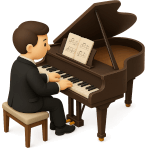
¿Cómo se llama la persona que toca el piano?
👆 Click to reveal answer
#5
¿Cómo se llama la persona que toca el piano?
What do you call a person who plays the piano?
✓ el pianista
💡 Hint: Pianist - person who plays piano, "pianista" for both male and female
Example: El pianista dio un concierto increíble en el auditorio principal. The pianist gave an incredible concert in the main auditorium.
EASY
wordwalker.ca/flashcards
#6
¿Quién instala y repara sistemas eléctricos en edificios y casas?
👆 Click to reveal answer
#6
¿Quién instala y repara sistemas eléctricos en edificios y casas?
Who installs and repairs electrical systems in buildings and houses?
✓ el electricista
💡 Hint: Skilled tradesperson who works with wiring, circuits, and electrical installations
Example: El electricista está instalando las luces del edificio nuevo. The electrician is installing the lights in the new building.
MEDIUM
wordwalker.ca/flashcards
#7
🤔
Ellos ___ ayudarnos. (poder - to be able)
👆 Click to reveal answer
#7
🤔
Ellos ___ ayudarnos. (poder - to be able)
podrían
✓ podrían
💡 Hint: They could/would be able - Irregular stem "podr-" + -ían, polite suggestion
Example: Ellos podrían ayudarnos con el proyecto. They could help us with the project.
HARD
wordwalker.ca/flashcards
#8
🚶‍♀️
Nosotros ___ al parque cada domingo. (ir - to go)
👆 Click to reveal answer
#8
🚶‍♀️
Nosotros ___ al parque cada domingo. (ir - to go)
íbamos
✓ íbamos
💡 Hint: We used to go - Irregular imperfect of "ir
Example: Nosotros íbamos al parque cada domingo. We used to go to the park every Sunday.
HARD
wordwalker.ca/flashcards
#9
👀
___ veo todos los días. (te - you)
👆 Click to reveal answer
#9
👀
___ veo todos los días. (te - you)
I see you every day.
✓ Te
💡 Hint: I see you every day - direct object pronoun "te" (you) for informal singular
Example: Te veo todos los días en el trabajo. I see you every day at work.
MEDIUM
wordwalker.ca/flashcards

📢 Share These Flash Cards

Help others learn Spanish! Share with friends and family:

🎮 Try the WordWalker Game (Learning Spanish for Kids)