









Dog walker character Default walker character

100% Free Forever • No Ads • No Subscriptions • Community Driven

Learn Spanish with free interactive flashcards and audio pronunciation

Multiple Categories

Plants and Animals • Numbers, Colors & Time • Greetings & Conversations • Medical & Emergencies

Choose Categories: (Click group to expand)

🔄 New Shuffle Order
Page 1 of 59 (530 total flash cards for selected categories)
#1
¿Qué bosque tiene árboles blancos?
👆 Click to reveal answer
#1
¿Qué bosque tiene árboles blancos?
What grove has white trees?
✓ el bosque de abedules
💡 Hint: Birch grove - trees with distinctive white bark, often in groups
Example: El bosque de abedules tiene árboles con corteza blanca. The birch forest has trees with white bark.
MEDIUM
wordwalker.ca/flashcards
#2
¿Qué pez depredador tiene dientes afilados?
👆 Click to reveal answer
#2
¿Qué pez depredador tiene dientes afilados?
What predatory fish has sharp teeth?
✓ el lucio
💡 Hint: Pike - aggressive freshwater predator, sharp teeth, ambush hunter
Example: El lucio es un depredador temido en los lagos. The pike is a feared predator in lakes.
MEDIUM
wordwalker.ca/flashcards
#3
¿Qué tiburón tiene cabeza en forma de T?
👆 Click to reveal answer
#3
¿Qué tiburón tiene cabeza en forma de T?
What shark has a T-shaped head?
✓ el tiburón martillo
💡 Hint: Hammerhead shark - distinctive hammer-shaped head, enhanced vision
Example: El tiburón martillo tiene ojos en los extremos de su cabeza. The hammerhead shark has eyes at the ends of its head.
MEDIUM
wordwalker.ca/flashcards
#4
🐑
¿Qué animal produce lana?
👆 Click to reveal answer
#4
🐑
¿Qué animal produce lana?
What animal produces wool?
✓ la oveja
💡 Hint: Sheep - woolly farm animal, "carnero" for ram
Example: La oveja tiene lana suave que usamos para hacer ropa. The sheep has soft wool that we use to make clothes.
EASY
wordwalker.ca/flashcards
#5
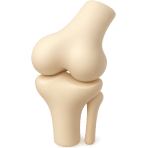
¿Qué articulación dobla la pierna?
👆 Click to reveal answer
#5
¿Qué articulación dobla la pierna?
What joint bends the leg?
✓ la rodilla
💡 Hint: Knee - largest joint in body, "menisco" is knee cartilage
Example: Me lastimé la rodilla jugando fútbol el fin de semana. I injured my knee playing soccer over the weekend.
EASY
wordwalker.ca/flashcards
#6
¿Con qué instrumento quirúrgico sujetan o extraen tejidos?
👆 Click to reveal answer
#6
¿Con qué instrumento quirúrgico sujetan o extraen tejidos?
With what surgical instrument do they hold or extract tissues?
✓ el fórceps
💡 Hint: Forceps are tong-like instruments used to grasp, hold, or extract tissue during procedures
Example: El cirujano utilizó el fórceps para extraer el tejido con cuidado. The surgeon used the forceps to extract the tissue carefully.
MEDIUM
wordwalker.ca/flashcards
#7
¿Qué pez tiene ojos grandes y brillantes?
👆 Click to reveal answer
#7
¿Qué pez tiene ojos grandes y brillantes?
What fish has large, shiny eyes?
✓ el lucioperca
💡 Hint: Walleye - freshwater fish, reflective eyes, popular game fish
Example: El lucioperca tiene ojos que brillan en la oscuridad. The walleye has eyes that glow in the dark.
MEDIUM
wordwalker.ca/flashcards
#8
🦧
¿Qué primate tiene pelo naranja y vive en los árboles?
👆 Click to reveal answer
#8
🦧
¿Qué primate tiene pelo naranja y vive en los árboles?
What primate has orange fur and lives in trees?
✓ el orangután
💡 Hint: Orangutan - great ape with orange fur, lives in trees, found in Southeast Asia
Example: El orangután pasa la mayor parte de su vida en los árboles. The orangutan spends most of its life in the trees.
EASY
wordwalker.ca/flashcards
#9
😰
¿Cómo dices "I'm afraid"?
👆 Click to reveal answer
#9
😰
¿Cómo dices "I'm afraid"?
✓ tengo miedo
💡 Hint: I'm afraid - "tener miedo" (to have fear), use "tener" not "estar" or "ser"
Example: Tengo miedo de las arañas grandes. I'm afraid of big spiders.
EASY
wordwalker.ca/flashcards

📢 Share These Flash Cards

Help others learn Spanish! Share with friends and family:

🎮 Try the WordWalker Game (Learning Spanish for Kids)