







Dog walker character Default walker character

100% Free Forever • No Ads • No Subscriptions • Community Driven

Learn Spanish with free interactive flashcards and audio pronunciation

Multiple Categories

People & Relationships • Places and Directions • Grammar • Medical & Emergencies • Entertainment

Choose Categories: (Click group to expand)

🔄 New Shuffle Order
Page 1 of 93 (829 total flash cards for selected categories)
#1
¿Qué usas en los ojos en lugar de gafas?
👆 Click to reveal answer
#1
¿Qué usas en los ojos en lugar de gafas?
What do you use in your eyes instead of glasses?
✓ los lentes de contacto
💡 Hint: Contact lenses - worn directly on eye, "lentillas" in Spain, "pupilentes" in Latin America
Example: Prefiero los lentes de contacto cuando hago deporte. I prefer contact lenses when I play sports.
MEDIUM
wordwalker.ca/flashcards
#2
😰
___ ____ pierdo el tren.
I almost missed the train.
👆 Click to reveal answer
#2
😰
___ ____ pierdo el tren.
✓ por poco
💡 Hint: I almost missed the train.
Example: Por poco pierdo el tren. I almost missed the train.
MEDIUM
wordwalker.ca/flashcards
#3
🎁
Yo ___ dinero para el viaje. (tener - to have)
👆 Click to reveal answer
#3
🎁
Yo ___ dinero para el viaje. (tener - to have)
tendré
✓ tendré
💡 Hint: I will have - Irregular future stem "tendr-" (not "tener-") + -é
Example: Yo tendré dinero para el viaje. I will have money for the trip.
HARD
wordwalker.ca/flashcards
#4
🛠️
¿Qué ___ tú este fin de semana? (hacer - to do)
👆 Click to reveal answer
#4
🛠️
¿Qué ___ tú este fin de semana? (hacer - to do)
harás
✓ harás
💡 Hint: What will you do - Irregular future stem "har-" (not "hacer-"), "fin de semana" = weekend
Example: ¿Qué harás este fin de semana? What will you do this weekend?
HARD
wordwalker.ca/flashcards
#5
Cuando era niño, yo ___ mucho. (jugar - to play)
👆 Click to reveal answer
#5
Cuando era niño, yo ___ mucho. (jugar - to play)
jugaba
✓ jugaba
💡 Hint: I used to play - Imperfect for habitual past, -AR verb: add -aba for yo, "cuando era niño" = when I was a child
Example: Cuando era niño, yo jugaba fútbol todos los días. When I was a child, I played soccer every day.
MEDIUM
wordwalker.ca/flashcards
#6
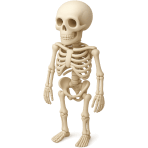
¿Cómo se llama el conjunto de huesos del cuerpo?
👆 Click to reveal answer
#6
¿Cómo se llama el conjunto de huesos del cuerpo?
What do you call the set of bones in the body?
✓ el esqueleto
💡 Hint: Skeleton - framework of bones, adult has 206 bones
Example: En la clase vimos el esqueleto humano completo. In class we saw the complete human skeleton.
MEDIUM
wordwalker.ca/flashcards
#7
¿Qué sientes cuando te enamoras?
👆 Click to reveal answer
#7
¿Qué sientes cuando te enamoras?
What do you feel when you fall in love?
✓ el enamoramiento
💡 Hint: Infatuation/falling in love - intense but short-lived passion
Example: El enamoramiento inicial es intenso pero luego viene el amor profundo. The initial infatuation is intense but then comes deep love.
MEDIUM
wordwalker.ca/flashcards
#8
✉️
Ellos ___ cartas. (escribir - to write)
👆 Click to reveal answer
#8
✉️
Ellos ___ cartas. (escribir - to write)
They write letters.
✓ escriben
💡 Hint: They write - -IR verb: remove -ir, add -en for ellos/ellas/ustedes
Example: Ellos escriben cartas a sus amigos. They write letters to their friends.
MEDIUM
wordwalker.ca/flashcards
#9
🍷
Tú siempre ___ café por la mañana. (beber - to drink)
👆 Click to reveal answer
#9
🍷
Tú siempre ___ café por la mañana. (beber - to drink)
bebías
✓ bebías
💡 Hint: You used to drink - Imperfect habitual, -ER verb: add -ías for tú, "siempre" = always (habitual)
Example: Tú siempre bebías café por la mañana. You always used to drink coffee in the morning.
MEDIUM
wordwalker.ca/flashcards

📢 Share These Flash Cards

Help others learn Spanish! Share with friends and family:

🎮 Try the WordWalker Game (Learning Spanish for Kids)