







Dog walker character Default walker character

100% Free Forever • No Ads • No Subscriptions • Community Driven

Learn Spanish with free interactive flashcards and audio pronunciation

Multiple Categories

Weather & Environment • Places and Directions • Greetings & Conversations • Grammar • People & Relationships • Medical & Emergencies

Choose Categories: (Click group to expand)

🔄 New Shuffle Order
Page 1 of 109 (980 total flash cards for selected categories)
#1
😌
¿Cómo dices "I feel better"?
👆 Click to reveal answer
#1
😌
¿Cómo dices "I feel better"?
✓ me siento mejor
💡 Hint: I feel better - "sentirse mejor" (to feel better), "estar mejor" also works
Example: Gracias por preguntar, ya me siento mejor. Thanks for asking, I feel better now.
MEDIUM
wordwalker.ca/flashcards
#2
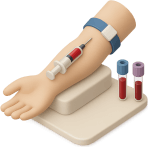
¿Quién saca sangre para análisis?
👆 Click to reveal answer
#2
¿Quién saca sangre para análisis?
Who draws blood for testing?
✓ el flebotomista
💡 Hint: Phlebotomist - specialist in drawing blood, from Greek "phleps" (vein)
Example: El flebotomista extrajo la muestra de sangre rápidamente. The phlebotomist drew the blood sample quickly.
HARD
wordwalker.ca/flashcards
#3
😞
¿Qué palabra usas para "ugly"?
👆 Click to reveal answer
#3
😞
¿Qué palabra usas para "ugly"?
What word do you use for 'ugly'?
✓ feo
💡 Hint: Ugly - not attractive, opposite of "bonito"
Example: Ese edificio es muy feo, no me gusta su diseño. That building is very ugly, I don't like its design.
EASY
wordwalker.ca/flashcards
#4
🌙
¿Cuánto tarda la luna en orbitar la Tierra?
👆 Click to reveal answer
#4
🌙
¿Cuánto tarda la luna en orbitar la Tierra?
How long does it take for the moon to orbit the Earth?
✓ 28 días
💡 Hint: Twenty-eight days - lunar month
Example: La luna tarda 28 días en orbitar la Tierra. The moon takes 28 days to orbit Earth.
HARD
wordwalker.ca/flashcards
#5
🧭
¿Qué instrumento siempre apunta al norte?
👆 Click to reveal answer
#5
🧭
¿Qué instrumento siempre apunta al norte?
What instrument always points north?
✓ la brújula
💡 Hint: Compass - points north with magnetic needle, essential navigation tool
Example: Los exploradores usan la brújula para orientarse en el bosque. Explorers use the compass to find their way in the forest.
MEDIUM
wordwalker.ca/flashcards
#6
¿Cómo dices "yes"?
👆 Click to reveal answer
#6
¿Cómo dices "yes"?
✓ sí
💡 Hint: Yes - affirmative, has accent (sí) to distinguish from "si" (if), from Latin "sic"
Example: — ¿Quieres café? — Sí, por favor. — Do you want coffee? — Yes, please.
EASY
wordwalker.ca/flashcards
#7
¿Qué hueso protege el cerebro?
👆 Click to reveal answer
#7
¿Qué hueso protege el cerebro?
What bone protects the brain?
✓ el cráneo
💡 Hint: Skull - bones of the head, "calavera" is colloquial
Example: El cráneo protege el cerebro de golpes fuertes. The skull protects the brain from strong blows.
MEDIUM
wordwalker.ca/flashcards
#8
👨
¿Cuál es la palabra para "father"?
👆 Click to reveal answer
#8
👨
¿Cuál es la palabra para "father"?
What is the word for 'father'?
✓ el padre
💡 Hint: Father - "papá" is informal, masculine
Example: Mi padre trabaja en una oficina del centro. My father works in an office downtown.
EASY
wordwalker.ca/flashcards
#9
¿Qué es un lugar verde en el desierto?
👆 Click to reveal answer
#9
¿Qué es un lugar verde en el desierto?
What is a green place in the desert?
✓ oasis
💡 Hint: Oasis - water and vegetation in the desert
Example: El oasis tiene palmeras y agua fresca. The oasis has palm trees and fresh water.
EASY
wordwalker.ca/flashcards

📢 Share These Flash Cards

Help others learn Spanish! Share with friends and family:

🎮 Try the WordWalker Game (Learning Spanish for Kids)