








Dog walker character Default walker character

100% Free Forever • No Ads • No Subscriptions • Community Driven

Learn Spanish with free interactive flashcards and audio pronunciation

Multiple Categories

Entertainment • Recreation • Plants and Animals • Greetings & Conversations • Places and Directions

Choose Categories: (Click group to expand)

🔄 New Shuffle Order
Page 1 of 73 (649 total flash cards for selected categories)
#1
👍
¿Cómo respondes a "gracias"?
👆 Click to reveal answer
#1
👍
¿Cómo respondes a "gracias"?
✓ de nada
💡 Hint: You're welcome - literally "of nothing
Example: — Gracias. — De nada, para eso están los amigos. — Thank you. — You're welcome, that's what friends are for.
EASY
wordwalker.ca/flashcards
#2
🔍
¿Cómo dices "I don't know"?
👆 Click to reveal answer
#2
🔍
¿Cómo dices "I don't know"?
✓ no sé
💡 Hint: I don't know - "sé" from "saber" (to know facts), different from "conocer" (to know people/places)
Example: — ¿Dónde está Juan? — No sé, no lo he visto. — Where is Juan? — I don't know, I haven't seen him.
EASY
wordwalker.ca/flashcards
#3
🦛
¿Qué animal grande vive en ríos africanos?
👆 Click to reveal answer
#3
🦛
¿Qué animal grande vive en ríos africanos?
What large animal lives in African rivers?
✓ el hipopótamo
💡 Hint: Hippopotamus - large river animal, semi-aquatic, powerful jaws, lives in Africa
Example: El hipopótamo pasa la mayor parte del día en el agua. The hippopotamus spends most of the day in the water.
EASY
wordwalker.ca/flashcards
#4
💑
¿Cómo dices "I love you"?
👆 Click to reveal answer
#4
💑
¿Cómo dices "I love you"?
✓ te quiero
💡 Hint: I love you - "te quiero" common for family/friends/partners, "te amo" deeper romantic love
Example: Te quiero mucho, mamá. Gracias por todo. I love you very much, mom. Thank you for everything.
MEDIUM
wordwalker.ca/flashcards
#5
📜
¿Qué haces cuando visitas lugares históricos?
👆 Click to reveal answer
#5
📜
¿Qué haces cuando visitas lugares históricos?
What do you do when you visit historical places?
✓ visitar monumentos
💡 Hint: Visit monuments - explore historical sites, learn about culture and history
Example: Nos gusta visitar monumentos cuando viajamos a nuevas ciudades. We like to visit monuments when we travel to new cities.
EASY
wordwalker.ca/flashcards
#6
¿Qué criatura marina parece medusa pero no lo es?
👆 Click to reveal answer
#6
¿Qué criatura marina parece medusa pero no lo es?
What marine creature looks like a jellyfish but is not?
✓ la carabela portuguesa
💡 Hint: Portuguese man-o-war - colonial organism, venomous tentacles, floats on surface
Example: La carabela portuguesa tiene tentáculos muy venenosos. The Portuguese man-o-war has very venomous tentacles.
HARD
wordwalker.ca/flashcards
#7
🏨
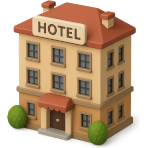
¿Dónde se quedan los turistas?
👆 Click to reveal answer
#7
🏨
¿Dónde se quedan los turistas?
Where do tourists stay?
✓ el hotel
💡 Hint: Hotel - temporary lodging, from French "hôtel" (mansion)
Example: Reservamos una habitación en el hotel cerca de la playa para las vacaciones. We reserved a room at the hotel near the beach for vacation.
EASY
wordwalker.ca/flashcards
#8
¿En qué saltas y rebotas?
👆 Click to reveal answer
#8
¿En qué saltas y rebotas?
What do you jump and bounce on?
✓ el trampolín
💡 Hint: Trampoline - elastic surface for jumping and bouncing recreationally
Example: Los niños saltan en el trampolín del jardín todas las tardes. The children jump on the garden trampoline every afternoon.
EASY
wordwalker.ca/flashcards
#9
🐄
¿Qué animal produce leche?
👆 Click to reveal answer
#9
🐄
¿Qué animal produce leche?
What animal produces milk?
✓ la vaca
💡 Hint: Cow - dairy animal, bovine, "ternera" for calf
Example: La vaca pasta tranquilamente en el campo. The cow grazes peacefully in the field.
EASY
wordwalker.ca/flashcards

📢 Share These Flash Cards

Help others learn Spanish! Share with friends and family:

🎮 Try the WordWalker Game (Learning Spanish for Kids)