












Dog walker character Default walker character

100% Free Forever • No Ads • No Subscriptions • Community Driven

Learn Spanish with free interactive flashcards and audio pronunciation

Multiple Categories

Entertainment • Plants and Animals • Numbers, Colors & Time • Places and Directions

Choose Categories: (Click group to expand)

🔄 New Shuffle Order
Page 1 of 50 (449 total flash cards for selected categories)
#1
¿Qué animal tiene máscara en la cara?
👆 Click to reveal answer
#1
¿Qué animal tiene máscara en la cara?
What animal has a mask on its face?
✓ el mapache
💡 Hint: Raccoon - masked bandit face, ringed tail, washes food before eating
Example: El mapache lava su comida antes de comérsela. The raccoon washes its food before eating it.
MEDIUM
wordwalker.ca/flashcards
#2
📅
¿Qué período de tiempo tiene veinticuatro horas?
👆 Click to reveal answer
#2
📅
¿Qué período de tiempo tiene veinticuatro horas?
What period of time has twenty-four hours?
✓ día
💡 Hint: Day - masculine noun despite ending in "a
Example: Hoy es un día perfecto para pasear. Today is a perfect day to go for a walk.
EASY
wordwalker.ca/flashcards
#3
🕒
¿Qué hora es?
👆 Click to reveal answer
#3
🕒
¿Qué hora es?
What time is it?
✓ las tres
💡 Hint: 3 o'clock - "las tres" or "son las tres" (it's three), afternoon time in most contexts
Example: La reunión es a las tres de la tarde. The meeting is at three in the afternoon.
MEDIUM
wordwalker.ca/flashcards
#4
📕
¿Qué libro cuenta una historia larga?
👆 Click to reveal answer
#4
📕
¿Qué libro cuenta una historia larga?
What book tells a long story?
✓ la novela
💡 Hint: Novel - long fictional story, Don Quixote famous Spanish novel
Example: Estoy leyendo la novela Don Quijote de Miguel de Cervantes. I'm reading the novel Don Quixote by Miguel de Cervantes.
MEDIUM
wordwalker.ca/flashcards
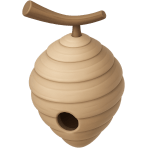
#5
¿Dónde viven las avispas?
👆 Click to reveal answer
#5
¿Dónde viven las avispas?
Where do wasps live?
✓ el nido de avispas
💡 Hint: Wasp nest - paper-like structure made by wasps, can be aggressive defenders
Example: El nido de avispas cuelga del árbol en el jardín. The wasp nest hangs from the tree in the garden.
MEDIUM
wordwalker.ca/flashcards
#6
🦨
¿Qué animal produce un olor muy fuerte para defenderse?
👆 Click to reveal answer
#6
🦨
¿Qué animal produce un olor muy fuerte para defenderse?
What animal produces a very strong smell to defend itself?
✓ el zorrillo
💡 Hint: Skunk - sprays strong-smelling liquid as defense, black with white stripes
Example: El zorrillo rocía un líquido de mal olor cuando tiene miedo. The skunk sprays a foul-smelling liquid when scared.
EASY
wordwalker.ca/flashcards
#7
🌻
¿Qué flor es?
👆 Click to reveal answer
#7
🌻
¿Qué flor es?
What flower is it?
✓ el girasol
💡 Hint: Sunflower - follows sun's movement, "gira" (turns) + "sol" (sun)
Example: El girasol gira siguiendo la luz del sol. The sunflower turns following the sunlight.
MEDIUM
wordwalker.ca/flashcards
#8
🔊
¿Qué hace que el sonido sea más fuerte?
👆 Click to reveal answer
#8
🔊
¿Qué hace que el sonido sea más fuerte?
What makes the sound louder?
✓ el altavoz
💡 Hint: Speaker - amplifies sound for everyone, "bocina" also common
Example: Necesitamos un altavoz más grande para la fiesta en el jardín. We need a bigger speaker for the party in the garden.
EASY
wordwalker.ca/flashcards
#9
¿Qué flores crecen naturalmente en los campos?
👆 Click to reveal answer
#9
¿Qué flores crecen naturalmente en los campos?
What flowers grow naturally in fields?
✓ las flores silvestres
💡 Hint: Wildflowers - naturally growing flowers, colorful meadows, diverse species
Example: Las flores silvestres crecen en los prados sin ser plantadas. Wildflowers grow in meadows without being planted.
EASY
wordwalker.ca/flashcards

📢 Share These Flash Cards

Help others learn Spanish! Share with friends and family:

🎮 Try the WordWalker Game (Learning Spanish for Kids)