














Dog walker character Default walker character

100% Free Forever • No Ads • No Subscriptions • Community Driven

Learn Spanish with free interactive flashcards and audio pronunciation

Multiple Categories

Places and Directions • Numbers, Colors & Time • Plants and Animals • Medical & Emergencies

Choose Categories: (Click group to expand)

🔄 New Shuffle Order
Page 1 of 54 (480 total flash cards for selected categories)
#1
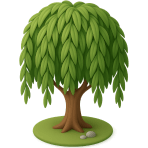
¿Qué árbol tiene ramas que cuelgan?
👆 Click to reveal answer
#1
¿Qué árbol tiene ramas que cuelgan?
What tree has hanging branches?
✓ el sauce
💡 Hint: Willow tree - graceful tree with drooping branches, grows near water
Example: El sauce tiene ramas largas que cuelgan hacia el agua. The willow has long branches that hang toward the water.
MEDIUM
wordwalker.ca/flashcards
#2
🐢
¿Qué animal tiene caparazón?
👆 Click to reveal answer
#2
🐢
¿Qué animal tiene caparazón?
What animal has a shell?
✓ la tortuga
💡 Hint: Turtle - reptile with hard shell, can live long time
Example: La tortuga marina viaja miles de kilómetros cada año. The sea turtle travels thousands of kilometers every year.
EASY
wordwalker.ca/flashcards
#3
📅
¿Qué día de la semana viene después del domingo?
👆 Click to reveal answer
#3
📅
¿Qué día de la semana viene después del domingo?
What day of the week comes after Sunday?
✓ lunes
💡 Hint: Monday - from Latin "dies Lunae" (day of Moon), always lowercase, masculine singular
Example: El lunes tengo una reunión importante en la oficina. On Monday I have an important meeting at the office.
EASY
wordwalker.ca/flashcards
#4
🤕
¿Qué tienes cuando te duele?
👆 Click to reveal answer
#4
🤕
¿Qué tienes cuando te duele?
What do you have when it hurts?
✓ el dolor
💡 Hint: Pain - "doler" is to hurt, from Latin "dolere" (to suffer)
Example: Sufro dolor en la espalda después de correr. I suffer back pain after running.
EASY
wordwalker.ca/flashcards
#5
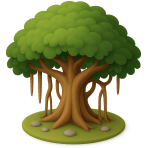
¿Qué árbol tiene raíces aéreas?
👆 Click to reveal answer
#5
¿Qué árbol tiene raíces aéreas?
What tree has aerial roots?
✓ el árbol de baniano
💡 Hint: Banyan tree - grows aerial roots, sacred in some cultures
Example: El árbol de baniano tiene raíces que cuelgan de sus ramas. The banyan tree has roots that hang from its branches.
HARD
wordwalker.ca/flashcards
#6
👥
¿Qué está junto a ti?
👆 Click to reveal answer
#6
👥
¿Qué está junto a ti?
What is next to you?
✓ al lado
💡 Hint: Next to/beside - immediately adjacent, "lado" means side
Example: La cafetería está al lado de la librería en el centro comercial. The coffee shop is next to the bookstore in the mall.
EASY
wordwalker.ca/flashcards
#7
¿Qué rana vive en los árboles?
👆 Click to reveal answer
#7
¿Qué rana vive en los árboles?
What frog lives in trees?
✓ la rana arbórea
💡 Hint: Tree frog - has sticky toe pads for climbing, lives in trees, often bright green
Example: La rana arbórea se pega a las hojas con sus dedos. The tree frog sticks to leaves with its fingers.
MEDIUM
wordwalker.ca/flashcards
#8
📅
¿Qué día es ahora, este día?
👆 Click to reveal answer
#8
📅
¿Qué día es ahora, este día?
What day is now, this day?
✓ hoy
💡 Hint: Today - this day, from Latin "hodie
Example: Hoy es un día muy especial. Today is a very special day.
EASY
wordwalker.ca/flashcards
#9
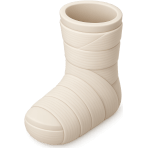
¿Qué ponen en un hueso roto?
👆 Click to reveal answer
#9
¿Qué ponen en un hueso roto?
What do they put on a broken bone?
✓ el yeso
💡 Hint: Plaster cast - immobilizes broken bone, "escayola" in Spain
Example: Le pusieron el yeso para inmovilizar la pierna rota. They put a cast on him to immobilize the broken leg.
MEDIUM
wordwalker.ca/flashcards

📢 Share These Flash Cards

Help others learn Spanish! Share with friends and family:

🎮 Try the WordWalker Game (Learning Spanish for Kids)